The Cleveland Museum of Art
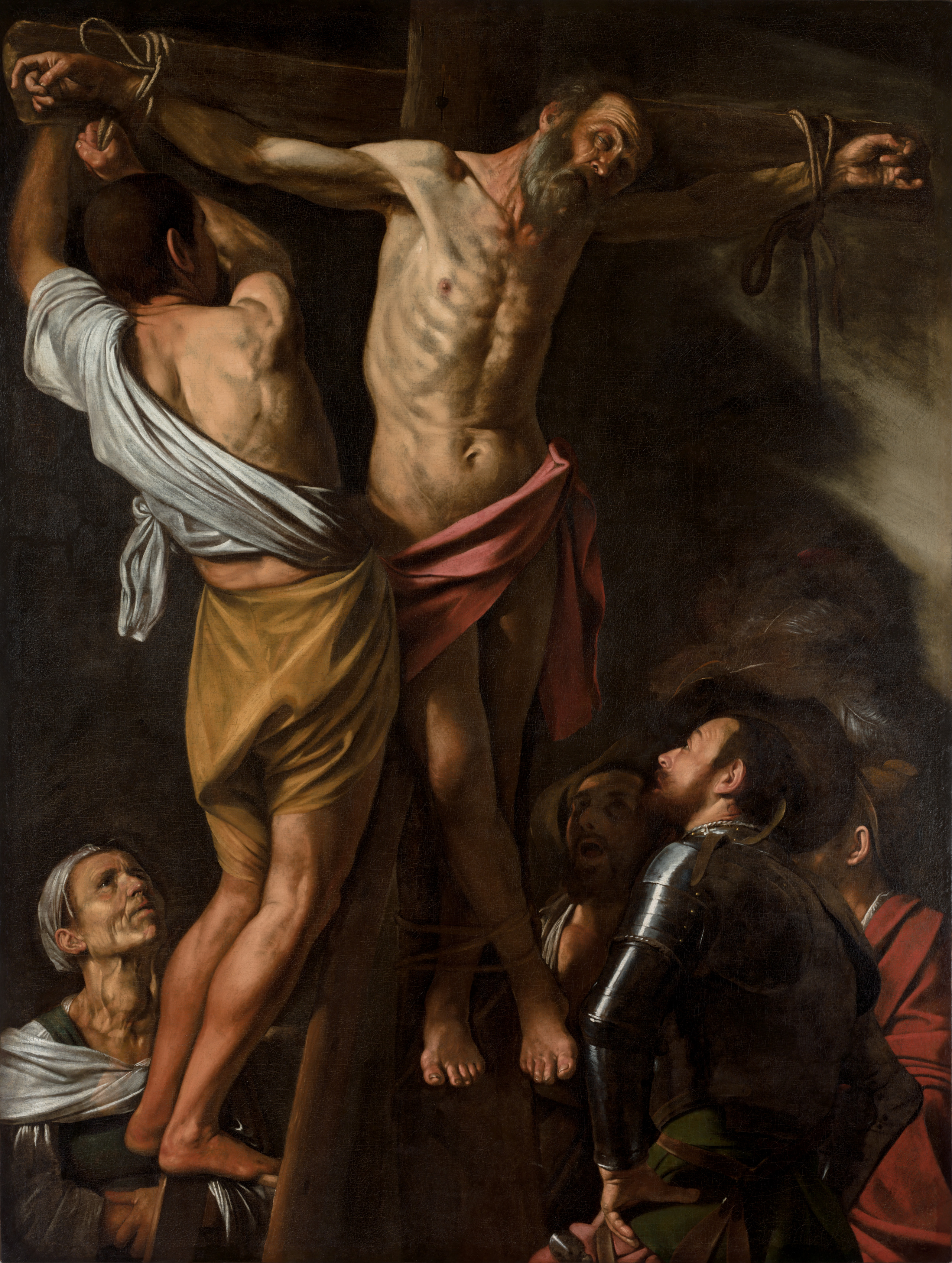
The Crucifixion of Saint Andrew
Description
Saint Andrew’s efforts to introduce Christianity to Greece in the first century CE were met with hostility from local authorities. He was sentenced to die on the cross because he refused to acknowledge pagan gods. For two days, Andrew preached from his martyr’s station to an increasingly sympathetic crowd. Bowing to public demand, Andrew’s would-be executioners attempted to untie him, but their hands were mysteriously paralyzed. Andrew’s desire for martyrdom was thus fulfilled and he died enveloped in divine light. Caravaggio’s innovative interpretation involves the viewer more closely in the event by presenting the crucifixion as intimate and private, rather than as a gruesome public spectacle. Bold contrasts of light and dark suggest the presence of God. A masterpiece of Baroque painting, Caravaggio’s Crucifixion of Saint Andrew is the only altarpiece by the artist in America.
Provenance
Don Juan Alonso Pimentel y Herrera, Eighth Conde de Benavente, Spanish viceroy in Naples.; Don Juan Francisco Alonso Pimentel y Ponce de Léon (grandson of above, inherited and lived 1584–1652) Tenth Conde de Benavente, Valladolid.; An unidentified convent in Castilla, Spain.; A. Tors, Madrid.; José Manuel Arnaiz, Madrid.; Legatt Brothers (London) sold by Arnaiz to the Cleveland Museum of Art.
Dimensions
202.5 × 152.7 cm
Movement / Period
Accession No
1976.2
Official Citations
Curatorial Affinity Stream
Continuing the Universe of Caravaggio (Italian, 1571–1610)
European Painting and Sculpture • Italy, Naples • Harmonious Works & Contemporaries
Continuous Discovery